Add a Curriculum Bundle to Your Account!
Please select a bundle.

The Pack contains associated resources for the learning experience, typically in the form of articles and videos. There is a teacher Pack (with only teacher information) and a student Pack (which contains only student information). As a teacher, you can toggle between both to see everything.
Here are the teacher pack items for Jamestown and Plymouth:

Overview In this experience, students explore how the goals and people of Jamestown and Plymouth shaped each colony’s development. First, they examine historical passenger lists to observe who journeyed to each colony. Next, they investigate what life was like in Jamestown and Plymouth using article summaries. Then, they compare the two colonies to identify how differences in purpose and settlers influenced their outcomes. Finally, the elaborate activity invites students to examine the impact of the colony of Jamestown on the environment. Estimated Duration: 45–60 minutes Objectives:
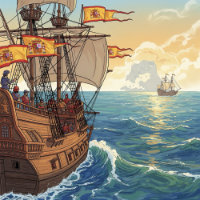
Before Jamestown and Plymouth became permanent English settlements, ships crossed the Atlantic carrying people with different hopes, goals, and challenges. Each name on a passenger list holds a clue about who these settlers were and what they might have expected in the New World. In this experience, you'll begin by looking closely at real historical records to start uncovering the bigger story behind these early journeys.
Objectives:
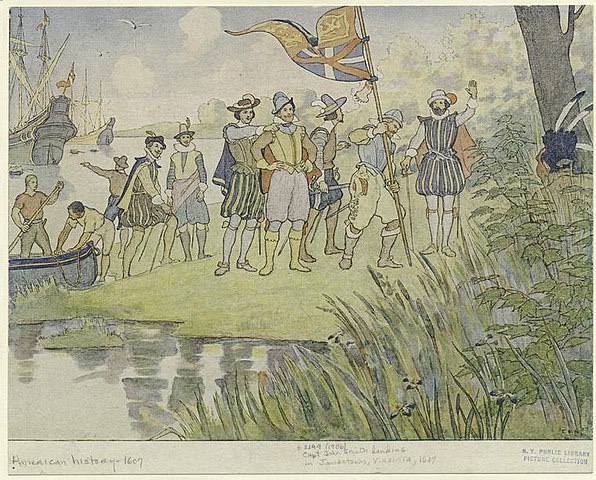
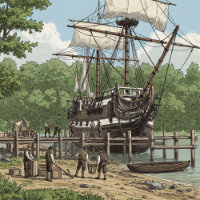
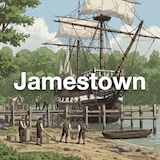
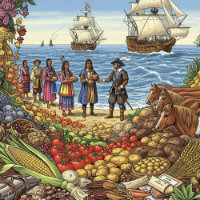
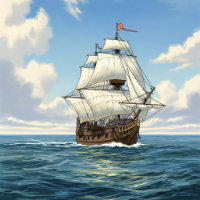
Captain John Smith lands at Jamestown with fellow settlers in 1607
Before Jamestown and Plymouth became permanent English settlements, ships crossed the Atlantic carrying people with different hopes, goals, and challenges. Each name on a passenger list holds a clue about who these settlers were and what they might have expected in the New World.
A simple list of names can sometimes reveal a lot about a bigger story. What kinds of things might you notice or wonder about when looking at a list of people from the past?
As students share their responses, facilitate a discussion about why historical records are created by asking: Why might leaders of an early English colony have wanted to keep a record of the people who lived there? Highlight answers that recognize historical records were often created for practical reasons but can also help historians understand the past. Then ask: Why might it be important to examine all the evidence you can find, even something as simple as a list of names, before drawing conclusions about a historical event? Press students to consider that each source provides only part of the story and that historians combine multiple pieces of evidence to build a more complete understanding of the past.
In this experience, you will use historical records to examine the causes of English colonization and compare how the Jamestown and Plymouth colonies developed.
Objectives:
Instructional Approach The premise of this experience is student-driven discovery through primary sources. Students are not expected to know everything at the start, and this scene is not about correcting every misconception. Instead, it opens the door for exploration, letting students begin to draw inferences from the historical passenger lists they examine.