Add a Curriculum Bundle to Your Account!
Please select a bundle.


The Pack contains associated resources for the learning experience, typically in the form of articles and videos. There is a teacher Pack (with only teacher information) and a student Pack (which contains only student information). As a teacher, you can toggle between both to see everything.
Here are the teacher pack items for South Asia: Government and Economy:

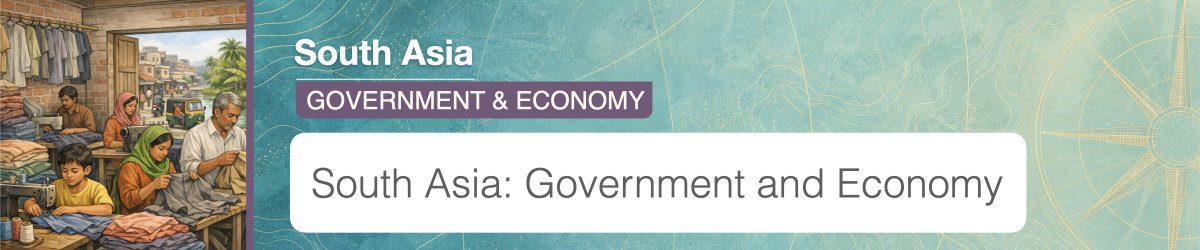
Overview: In this experience, students investigate the governments and economies of India, Pakistan, and Bangladesh and compare major industries, resources, exports, and economic conditions. They examine how government decisions can affect businesses, workers, trade, and economic opportunities. Finally, students analyze child labor in the fashion supply chain as a case study of how economic conditions, business decisions, and government rules can affect people’s lives. Students collaborate in small groups for scenes 2. Objectives:
Globalization has connected the economies of the world. Many products used in a country are produced in other countries. A shirt sold in a local store might begin with cotton grown in one place, be turned into fabric somewhere else, be sewn in a factory in South Asia, and then travel through ports and stores before reaching a customer.
Making and selling that shirt involves more than a business. Workers provide labor, companies make decisions about production, and governments create rules about trade, workplaces, wages, transportation, and other parts of the economy. Roads, ports, electricity, technology, and natural resources can also affect what businesses are able to produce.
India, Pakistan, and Bangladesh all have large economies connected to agriculture, manufacturing, services, and international trade. Their governments also make decisions that affect how these economies operate.
In this experience, you will compare the economies and governments of India, Pakistan, and Bangladesh and examine how government decisions and economic conditions can affect businesses, workers, and the choices people make.
Objectives:
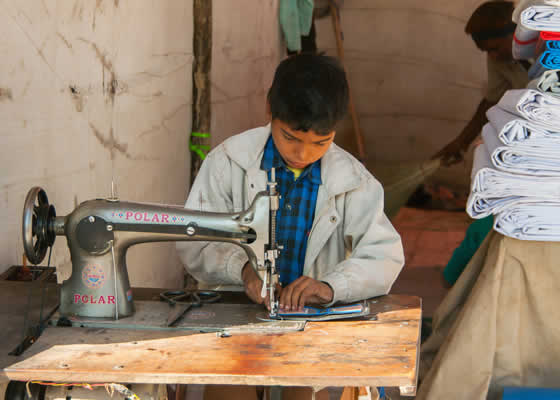
What does a product made in one country and sold in another reveal about how economies in different places are connected?
After students respond, invite several students to explain the connections they identified. Use the discussion to establish that making and selling one product can connect workers, businesses, resources, transportation systems, consumers, and countries. Then introduce government as another part of this relationship. Governments make decisions about trade, transportation, workplaces, taxes, and business rules that can affect how products are made and sold. Possible follow-up questions include:
Divide students into their small groups and assign each group one of three countries: India, Pakistan, or Bangladesh. Assign a reporter to upload the result for each group, or tell the students to choose their own reporter.
When everyone is ready to continue, unlock the next scene.


