Add a Curriculum Bundle to Your Account!
Please select a bundle.



The Pack contains associated resources for the learning experience, typically in the form of articles and videos. There is a teacher Pack (with only teacher information) and a student Pack (which contains only student information). As a teacher, you can toggle between both to see everything.
Here are the teacher pack items for China and Its Neighbors: History and Its Influence, Part 1:

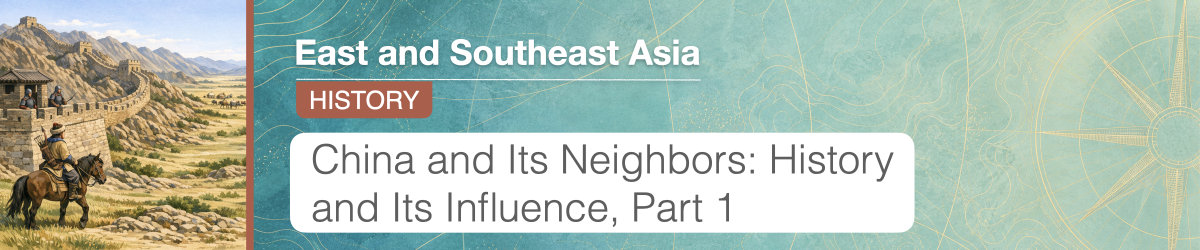
Overview: In this experience, students examine how rulers and empires used military power, government organization, technology, and large projects to control territory and influence societies. They investigate the rise of the Qin Dynasty and the rule of Qin Shi Huangdi, then trace how the Great Wall developed and changed over time. Finally, students examine Genghis Khan and the Mongol Empire to analyze both the destructive effects of conquest and the connections created across a vast empire. Objectives:
Throughout history, rulers have faced a difficult problem: controlling large territories filled with different communities, local leaders, and competing interests. Winning land through warfare was only one part of building an empire. Rulers also had to create systems for governing, communicating, collecting taxes, moving armies, and protecting territory.
Some rulers responded by creating common laws or systems. Others built roads, defensive structures, or powerful armies. These choices could strengthen an empire, but they could also require enormous amounts of labor and place heavy demands on the people being ruled.
China and Mongolia provide important examples of these relationships. Qin Shi Huangdi unified competing states and created a centralized Chinese empire. Centuries later, Mongol leaders built an empire that stretched across much of Asia and beyond.
In this experience, you will examine how rulers used power, organization, technology, and large projects to build and control empires and how their decisions influenced the societies that followed.
Objectives:
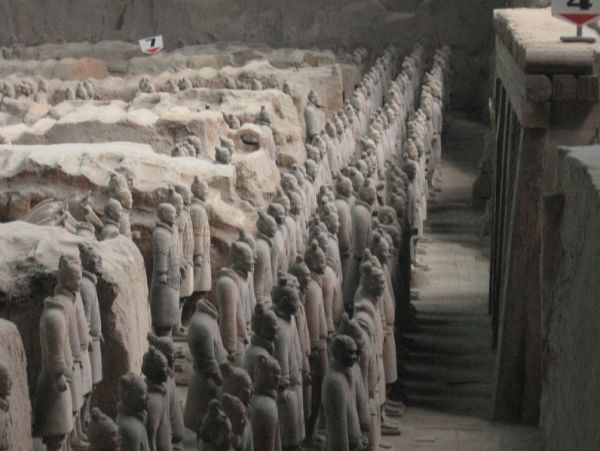
Terracotta Army of Qin Shi Huangdi
Imagine that several regions with different rulers, laws, and customs have been brought under one government. What would a ruler need to do to keep such a large territory united?
After students respond, invite several students to share one challenge and one possible response. Use the discussion to establish that conquering territory and governing territory are different problems. Students may identify communication, transportation, defense, laws, taxes, trade, local resistance, or keeping control over distant places. Explain that the rulers they study in this experience made choices in many of these areas, sometimes creating systems that lasted beyond their own reigns and sometimes causing resistance or conflict. Possible follow-up questions include:
When everyone is ready to continue, unlock the next scene.


