Add a Curriculum Bundle to Your Account!
Please select a bundle.




The Pack contains associated resources for the learning experience, typically in the form of articles and videos. There is a teacher Pack (with only teacher information) and a student Pack (which contains only student information). As a teacher, you can toggle between both to see everything.
Here are the teacher pack items for Colonizing Texas, 1821–1830:

Overview In this experience, students study the factors affecting colonization of Texas during the Mexican era. They learn about the various Mexican colonization laws. Then they learn about the motivations for Anglo-American settlers to come to Texas. Finally, they learn about the role of empresarios in the colonization of Texas. Note that there are three interrelated experiences that deal with settlement of Texas in the period of 1821–1830: There are two general resources provided to students in the pack of all three experiences: a timeline of events in Texas history from 1826–1842 and a video (30 minutes). You can refer students to these resources at any point during these experiences. Objectives:
When Spanish rule ended in 1821, Texas had only a few thousand non-Indigenous residents. During the 1820s, the population grew rapidly as Mexico encouraged immigration and new settlements were established. In this lesson, you will learn about the factors that contributed to this population growth.
Objectives:
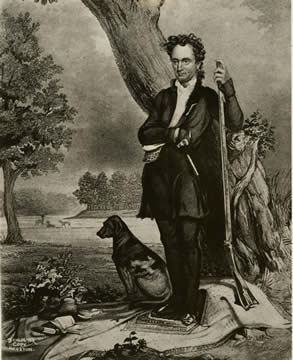
Stephen F. Austin, Father of Texas
The word empresario is Spanish for entrepreneur, a person who organizes a business or project and takes on the risks involved. In Mexican Texas, empresarios were individuals who received permission to bring settlers to Texas and establish colonies.
What words describe the skills or qualities an empresario would need to establish a successful colony in Texas? To list multiple words, separate them with a comma like this: dog, cat.
An entrepreneur is a person who organizes and manages any enterprise, especially a business, usually with considerable initiative and possible risk. Entrepreneurs are usually identified as founders of business, inventors of ideas who take them to market, and developers of new processes. After students learn about empresarios, they will be asked to explain the connection between empresarios and modern entrepreneurs.
When everyone is ready to continue, unlock the next scene.