Add a Curriculum Bundle to Your Account!
Please select a bundle.




The Pack contains associated resources for the learning experience, typically in the form of articles and videos. There is a teacher Pack (with only teacher information) and a student Pack (which contains only student information). As a teacher, you can toggle between both to see everything.
Here are the teacher pack items for Texas During the Mexican War of Independence:


Overview Students examine key events in Texas during the Mexican War of Independence, including the role of José Bernardo Gutiérrez de Lara and the Battle of Medina. They learn how the Constitution of 1824 created the state of Coahuila y Tejas and how Erasmo Seguín represented Texas interests in the new Mexican government. Finally, they examine the lasting Spanish cultural influences in Texas. Objectives:
From 1810 to 1821, people in Mexico fought to end Spanish rule. The conflict also affected Texas, which was then part of New Spain. Fighting, political unrest, and attempts to challenge Spanish authority reached Texas as different groups supported or resisted independence.
In this lesson, you will examine important events in Texas during the Mexican War of Independence and consider how those events connected Texas to the larger struggle against Spanish rule.
Objectives

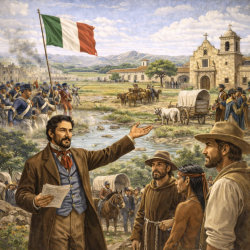
Annual Re-enactment of the Grito de Dolores Speech on September 16
During a war for independence, people living in the same region may support different sides. What are some reasons a person might support the existing government? What are some reasons a person might support independence?
Student answers may include loyalty to the government, fear of change, military service, economic interests, political beliefs, desire for greater self-government, or dissatisfaction with existing rule. Accept reasonable responses. Emphasize that people living in Texas did not all support the same side during the Mexican War of Independence. The terms students may encounter in the readings include: Spanish side: Supporters of independence: Explain that these terms are related but are not exact synonyms. A person described as a rebel or insurgent was resisting Spanish authority, while a republican specifically supported a particular form of government. Different sources may use different terms depending on the person or group being described.
When everyone is ready to continue, unlock the next scene.