Add a Curriculum Bundle to Your Account!
Please select a bundle.




The Pack contains associated resources for the learning experience, typically in the form of articles and videos. There is a teacher Pack (with only teacher information) and a student Pack (which contains only student information). As a teacher, you can toggle between both to see everything.
Here are the teacher pack items for Spanish Settlement in Texas:

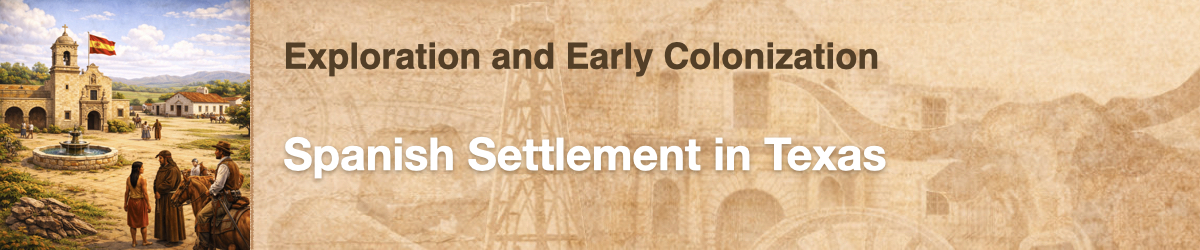
Overview In this experience, students learn about several forms of Spanish settlement and land use in Texas, including missions, pueblos, and ranches. They work in small groups to research a specific mission. Then they examine the early development of San Antonio and the cooperation and conflicts that developed between mission communities and private ranchers. Students will collaborate in small groups for scene 2 through scene 4. Estimated Duration: 45–60 minutes Vocabulary Words: Objectives:
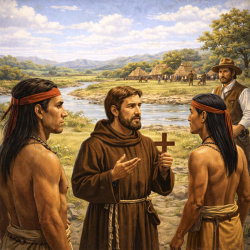
From the 1600s through the late 1700s, Spanish officials and Franciscan missionaries established missions, presidios, and settlements in the land that is now Texas. Missions were religious and colonial communities where missionaries sought to convert Indigenous peoples to Catholicism and extend Spanish influence. Presidios were military forts staffed by Spanish soldiers who helped defend settlements and Spain’s territorial claims.
Indigenous peoples responded to Spanish missions in different ways. Some lived at missions for periods of time, while others resisted Spanish control, left the missions, or continued practicing their own traditions.
Spanish settlement also left a lasting cultural and geographic influence in Texas. Some present-day communities developed near Spanish missions, presidios, or settlements, and many Texas cities, rivers, and regions still have Spanish names.
Objectives:
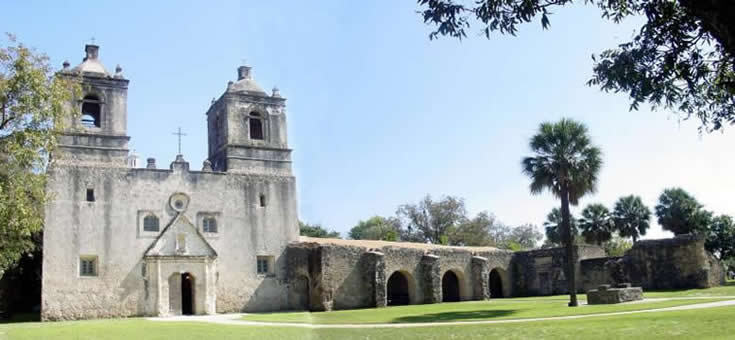
Mission Concepción, San Antonio
Post at least one place in Texas with a name that comes from Spanish. If you list more than one, separate them with commas.
Some possible answers include:
Divide students into their small groups for the next three scenes. When everyone is ready to continue, unlock the next scene.