Regions of Texas: North Central Plains


Students view a photograph of an unidentified bird and try to name it. Then they describe the physical characteristics of the North Central Plains. Next they interpret a thematic map of population change to describe the region’s population. Finally they look at a historic railroad lines map and predict how the railroads may have affected the economic development of Fort Worth.

This learning experience is designed for device-enabled classrooms. The teacher guides the lesson, and students use embedded resources, social media skills, and critical thinking skills to actively participate. To get access to a free version of the complete lesson, sign up for an exploros account.

1:1 Devices
Teacher Pack

The Pack contains associated resources for the learning experience, typically in the form of articles and videos. There is a teacher Pack (with only teacher information) and a student Pack (which contains only student information). As a teacher, you can toggle between both to see everything.

Here are the teacher pack items for Regions of Texas: North Central Plains:

Preview - Scene 1
Exploros Learnign Experience Scene Navigation


Overview

In this experience, students view a photograph of an unidentified bird (roadrunner) and try to name it. Then they describe the physical characteristics of the North Central Plains. Next they interpret a thematic map of population change to describe the region’s population. Finally they look at a historic railroad lines map and predict how the railroads may have affected the economic development of Fort Worth.

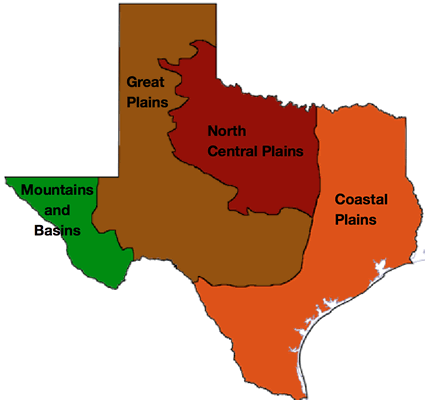
Note that geographers divide the United States into ten natural regions, and four of them are found in Texas: the Mountains and Basins, the Great Plains, the North Central Plains, and Coastal Plains. The Teacher Pack contains a link to educational resources on the different regions.

Estimated duration: 35-45 minutes


Discovery Reading

A printable Discovery Reading is included in the student pack as a support for understanding the experience’s core content and concepts. This Discovery Reading is not necessary to complete the experience and serves as an optional support resource.

Vocabulary Words:

These vocabulary words are used in the experience or connect closely to the standards and content students examine. Students should understand these terms as they work through the experience.

  • North Central Plains: one of the four physical regions of Texas; it has grasslands, some hills and valleys, hot summers, cooler winters, and farming and ranching.
  • subregion: a smaller area inside a larger region that has its own features; the North Central Plains has the Rolling Plains, Cross Timbers, and Grand Prairie.
  • thematic map: a map that shows information about one topic, such as population change or railroad lines.
  • population change: the way the number of people in a place grows, stays the same, or gets smaller over time.
  • natural resources: useful materials found in nature that people use, such as oil and natural gas in the North Central Plains.
  • economic activity: the work people do to earn a living, such as farming, ranching, and shipping goods.
  • railroad lines: train routes that connect places and help move people and goods, which can help a city grow.
 

Objectives

  • Identify physical characteristics of the North Central Plains.
  • Interpret a thematic map.


Engage


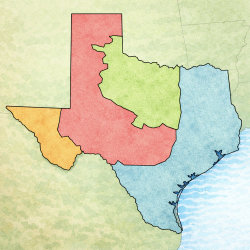
Map showing the four regions of Texas

Map of the Four Regions of Texas


Texas is divided into four regions—the Mountains and Basins, the Great Plains, the North Central Plains, and Coastal Plains. The regions are determined by the physical geography, such as landforms, climate, and vegetation. In this experience, you will learn about the North Central Plains.

Objectives
  • Identify physical characteristics of the North Central Plains.
  • Interpret a thematic map.


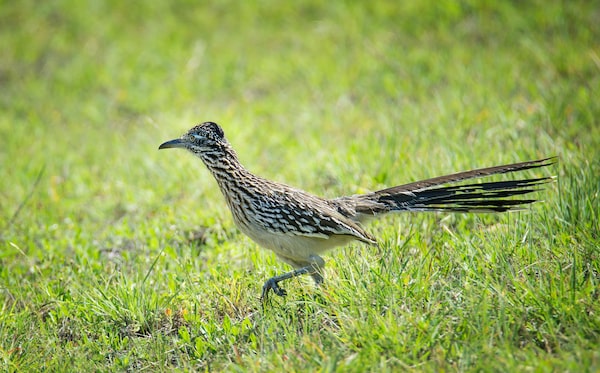
The animal shown above lives in the North Central Plains region, as well several other regions in Texas. Can you name the animal?

Post your answer

Correct answers: roadrunner, chaparral bird, chaparral cock

Students may be familiar with roadrunners from the Looney Tunes cartoon. Unlike the cartoon, in real life, coyotes can run twice as fast as a roadrunner. An ostrich can run faster than a roadrunner. Also, roadrunners make a cooing sound; they do not say “beep, beep.”


When everyone is ready to continue, unlock the next scene.

End of Preview
The Complete List of Learning Experiences in Texas Geography and Its Indigenous People Unit.
Would you like to preview the rest of this learning experience, and get access to the entire functioning Texas Studies course for your classroom? Sign up using your school email address below.
Back to top