Add a Curriculum Bundle to Your Account!
Please select a bundle.



The Pack contains associated resources for the learning experience, typically in the form of articles and videos. There is a teacher Pack (with only teacher information) and a student Pack (which contains only student information). As a teacher, you can toggle between both to see everything.
Here are the teacher pack items for Settled Tribes: The Caddo and Jumano:

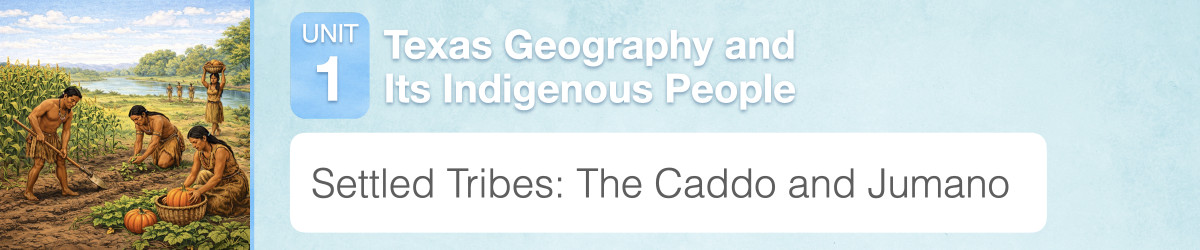
Overview In this experience, students brainstorm what people need in order to survive. Then they learn about the Caddo and Jumano people in Texas. Next they compare the houses of these two tribal nations and how the materials reflect how each group adapted to the environment. Finally they take a closer look at the Caddo culture and write a short report about an aspect that interests them. Estimated duration: 40-50 minutes Discovery Reading A printable Discovery Reading is included in the student pack as a support for understanding the experience’s core content and concepts. This Discovery Reading is not necessary to complete the experience and serves as an optional support resource. Vocabulary Words: These vocabulary words are used in the experience or connect closely to the standards and content students examine. Students should understand these terms as they work through the experience. Objective
If you have access to leveled readers about the Caddo, the Jumano, or another sedentary group of indigenous people, assign them to the students in parallel to this experience.
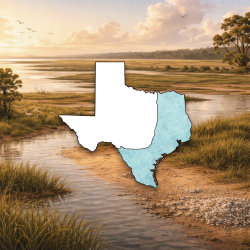
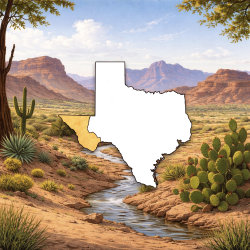
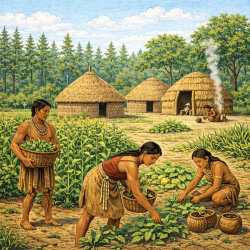
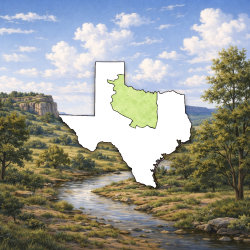
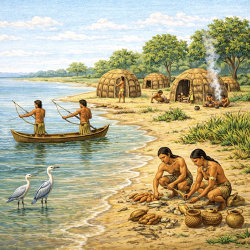
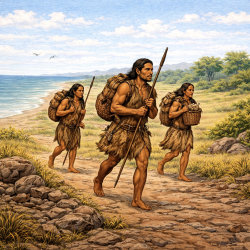
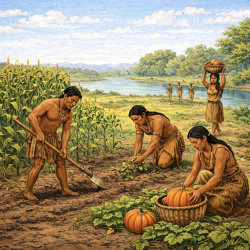
Some indigenous people in what is now Texas were sedentary, which means they settled in one place, often in villages. In this lesson you will focus on two of the indigenous groups that settled in Texas, the Caddo and the Jumano.
Objective
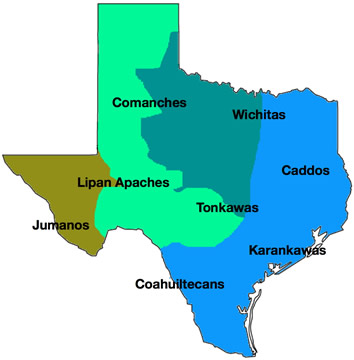
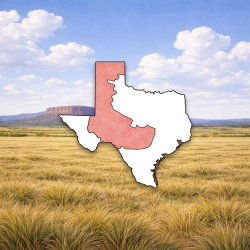
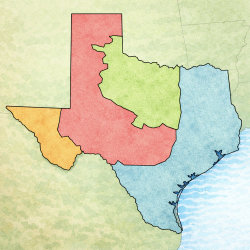
Map of Indigenous tribal nations in Texas
What are the basic needs that people have to have in order to survive? To say more than one word, separate them with a comma like: cat, dog, fish.
Human beings have certain basic needs. They must have food, water, air, and shelter to survive. If any one of these basic needs is not met, then humans cannot survive.