Mass Immigration: The Huddled Masses


Social Studies American History Civil War Through 1900 Mass Immigration: The Huddled Masses
Students identify many holidays that have been brought to the United States by different immigrant groups. Then they learn about some of the major immigrant groups of the nineteenth century—why they came and how they lived. Next they explore an interactivity about Ellis Island and analyze the Statue of Liberty as a symbol for immigration. Finally they research an ethnic neighborhood and write a short report.

This learning experience is designed for device-enabled classrooms. The teacher guides the lesson, and students use embedded resources, social media skills, and critical thinking skills to actively participate. To get access to a free version of the complete lesson, sign up for an exploros account.

1:1 Devices
Teacher Pack

The Pack contains associated resources for the learning experience, typically in the form of articles and videos. There is a teacher Pack (with only teacher information) and a student Pack (which contains only student information). As a teacher, you can toggle between both to see everything.

Here are the teacher pack items for Mass Immigration: The Huddled Masses:

Preview - Scene 1
Exploros Learnign Experience Scene Navigation


Overview

In this experience, students identify holidays that were brought to the United States by different immigrant groups. Then they learn about some of the major immigrant groups of the nineteenth century, why they came, and how they lived. Next, they learn about Ellis Island and analyze the Statue of Liberty as a symbol of immigration. Finally, they research an immigrant community and write a short report.

If you have access to leveled readers about immigrant groups and communities, Ellis Island, or the history of the Statue of Liberty, assign them to students in parallel with this experience.

Estimated duration: 45-90 minutes, depending on how much time you want to give students to research and write their reports

Vocabulary words:

  • persecution
  • famine
  • second generation
  • ethnic
  • custom
  • tradition
  • inspection
  • plaque

Objectives

  • Identify different groups of immigrants arriving in the 19th century
  • Explain how the immigrants contributed to the culture and economic development of the United States


Engage


People from many parts of the world have immigrated to the United States. Over time, immigrants have helped shape the country by bringing their customs, traditions, skills, and ideas. In this experience, you will learn about immigration to the United States, especially during the second half of the 1800s.

Objectives
  • Identify different groups of immigrants arriving in the 19th century
  • Explain how the immigrants contributed to the culture and economic development of the United States


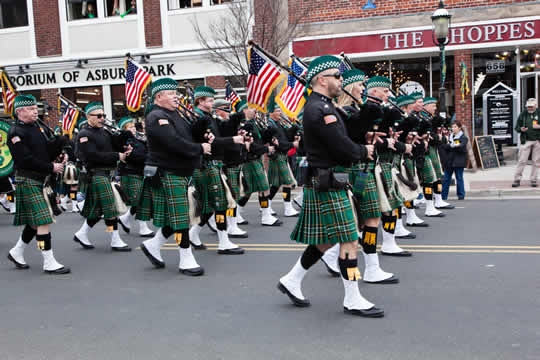
rows of bagpipe players dressed in green kilts and berets, carrying American flags

St. Patrick’s Day Parade in Asbury Park, New Jersey


Which of the following holidays and customs have you heard of or celebrated yourself?

A) watch a Mardi Gras parade
B) wear green clothing on St. Patrick’s Day
C) eat special foods on Día de Muertos (Day of the Dead)
D) dance the polka during Oktoberfest
E) visit someone’s home for T?t
F) attend a Midsummer celebration party
G) light candles for Diwali
H) attend a Chuseok meal

Ask students if they know the origins of the holidays listed above.

Many immigrant communities have brought holiday traditions with them and helped make these celebrations part of life in the United States:

  • Mardi Gras: French colonists brought traditions of celebrating before the Catholic season of Lent.
  • St. Patrick’s Day: Irish immigrants helped spread celebrations honoring St. Patrick, the patron saint of Ireland.
  • Día de Muertos: Mexican immigrants brought traditions connected to this holiday, which honors family members and loved ones who have died.
  • Oktoberfest: German immigrants brought traditions connected to this German fall festival.
  • Tết: Vietnamese immigrants brought traditions for celebrating Tết, the Vietnamese Lunar New Year.
  • Midsummer: Swedish immigrants brought traditions for celebrating Midsummer, a holiday that marks the summer season.
  • Diwali: Immigrants from India and other parts of South Asia brought traditions connected to Diwali, the Festival of Lights.
  • Chuseok: Korean immigrants brought traditions for celebrating Chuseok, a harvest holiday centered on family and honoring ancestors.


When everyone is ready to continue, unlock the next scene.


End of Preview
The Complete List of Learning Experiences in Civil War Through 1900 Unit.
Would you like to preview the rest of this learning experience, and get access to the entire functioning American History course for your classroom? Sign up using your school email address below.
Back to top