Add a Curriculum Bundle to Your Account!
Please select a bundle.





The Pack contains associated resources for the learning experience, typically in the form of articles and videos. There is a teacher Pack (with only teacher information) and a student Pack (which contains only student information). As a teacher, you can toggle between both to see everything.
Here are the teacher pack items for Nineteenth Century Literature:


Overview In this experience, students are introduced to tall tales through the story of Paul Bunyan. Then they read four brief excerpts from nineteenth-century literature and explain what each one reveals about life in the United States during the time period. Finally, they write the opening of a short story or poem that reflects life in the United States during the second half of the nineteenth century. The short passages are from the following literary works: You can combine this history lesson with an ELAR lesson and have students read a larger portion of these works. Review any additional excerpts before assigning them to ensure that the language and content are appropriate for 5th grade, especially selections from The Adventures of Huckleberry Finn. You may choose to read the excerpts aloud as a class or use a reading workshop model to support students who need additional reading support. Estimated duration: 60 minutes or longer, depending on how you choose to teach the literature Discovery Reading A printable Discovery Reading is included in the student pack as a support for understanding the experience’s core content and concepts. This Discovery Reading is not necessary to complete the experience and serves as an optional support resource. Vocabulary Words: These vocabulary words are used in the experience or connect closely to the standards and content students examine. Students should understand these terms as they work through the experience. Objectives
There are many ways to learn about people who lived long ago. You can learn in history class, read books, or study old photographs. You can also read poems and stories written during the time you are studying. These works can help you understand how some people thought about and experienced life at the time. In this experience, you will read parts of a poem and three stories to learn about life in the United States after the Civil War.
Objectives
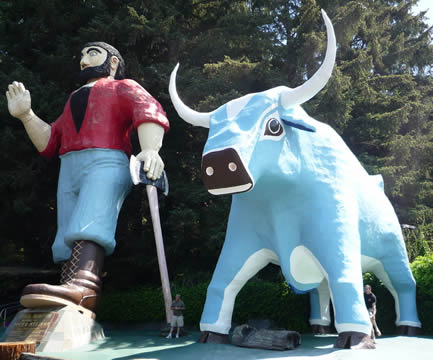
Do you know the name of the character shown above? If not, make up a name for him.
Ask students what they know about Paul Bunyan. If they are familiar with the character, ask whether they know who created him or what genre he belongs to. The Student Pack contains a recorded reading of the tale of Paul Bunyan.
When everyone is ready to continue, unlock the next part.
The character’s name is Paul Bunyan. No one knows who first told stories about him. Paul Bunyan stories became popular in logging camps, especially around the Great Lakes. In the stories, Paul was known for his great strength, speed, and skill. Some tales even claimed that he could clear huge forests by himself.
The Paul Bunyan story belongs to a genre called a tall tale. A tall tale is a story with characters and events that are greatly exaggerated. These exaggerations make the stories exciting and funny. Tall tales were often shared aloud. After a hard day of work, people could gather together to tell stories and entertain one another.
Ask students: What does the popularity of tall tales tell you about life in some American communities during this time? Many people worked long hours at difficult jobs and enjoyed telling stories for entertainment. Tall-tale heroes, such as Paul Bunyan and Pecos Bill, often had exaggerated versions of the strength and skills valued in their communities. Explain that stories like these can give us clues about the work, values, and interests of some Americans during this time.
When everyone is ready to continue, unlock the next scene.


